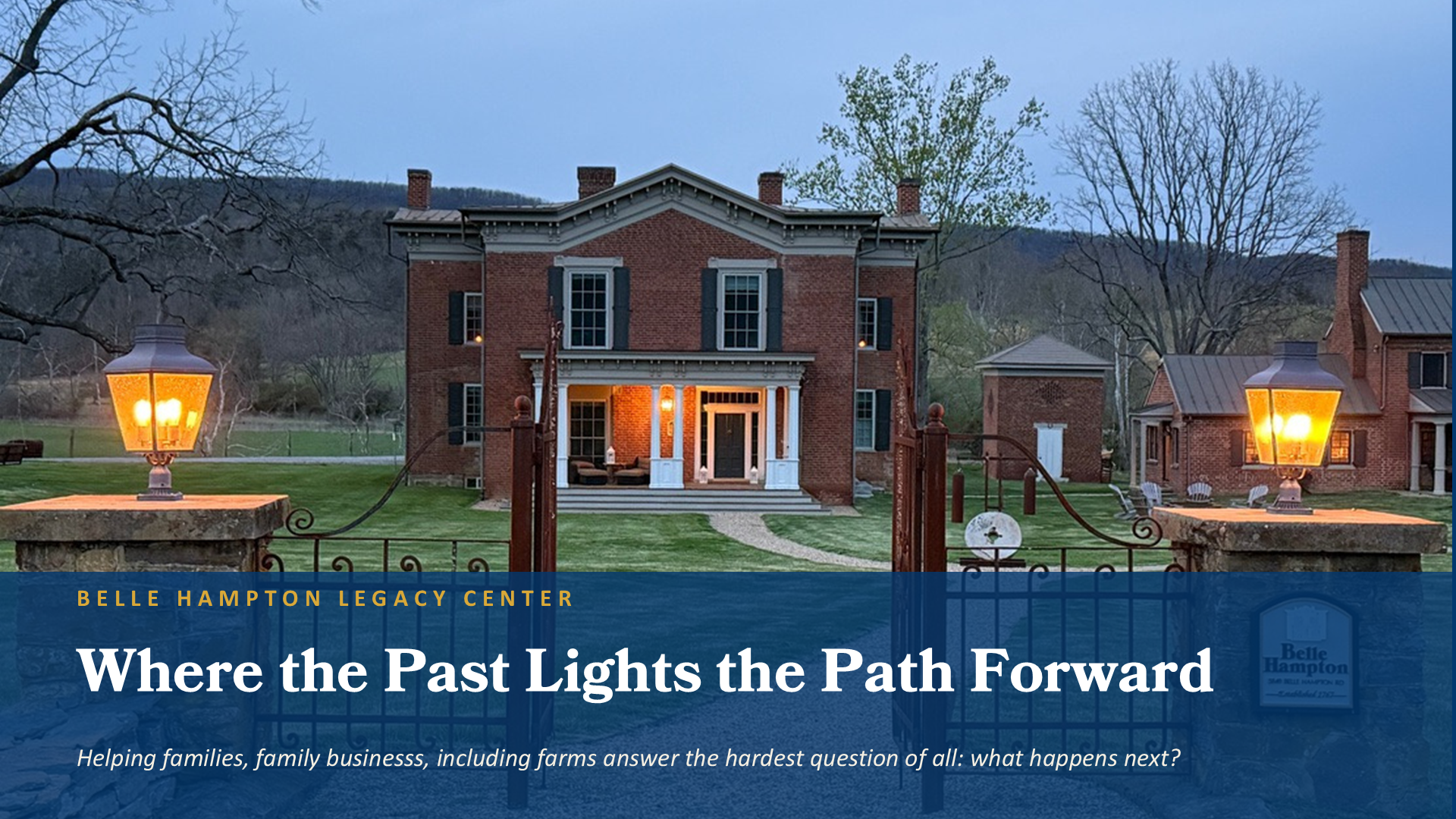
What happens next? Your legacy depends on the answer.
“For more than 250 years, Belle Hampton Farm has stayed in the Hoge family through war, hardship, and the hard work of generations. By restoring it and founding the Legacy Center, Tom and Madeline Hoge turned a family's survival story into a resource for others facing the same crossroads.”
-Madeline S. Hoge
About the Belle Hampton Legacy Center
The Belle Hampton Legacy Center is a nonprofit 501(c)(3) that helps family-owned businesses and farms answer the hardest question of all: What happens next? Rooted in Belle Hampton Farm, a working farm passed down through generations since 1767, we provide education, peer community, and leadership development to help families preserve not just their property, but also their values, stories, and enterprise for generations to come.
Who we are
Legacies Worth Preserving. Futures Worth Building
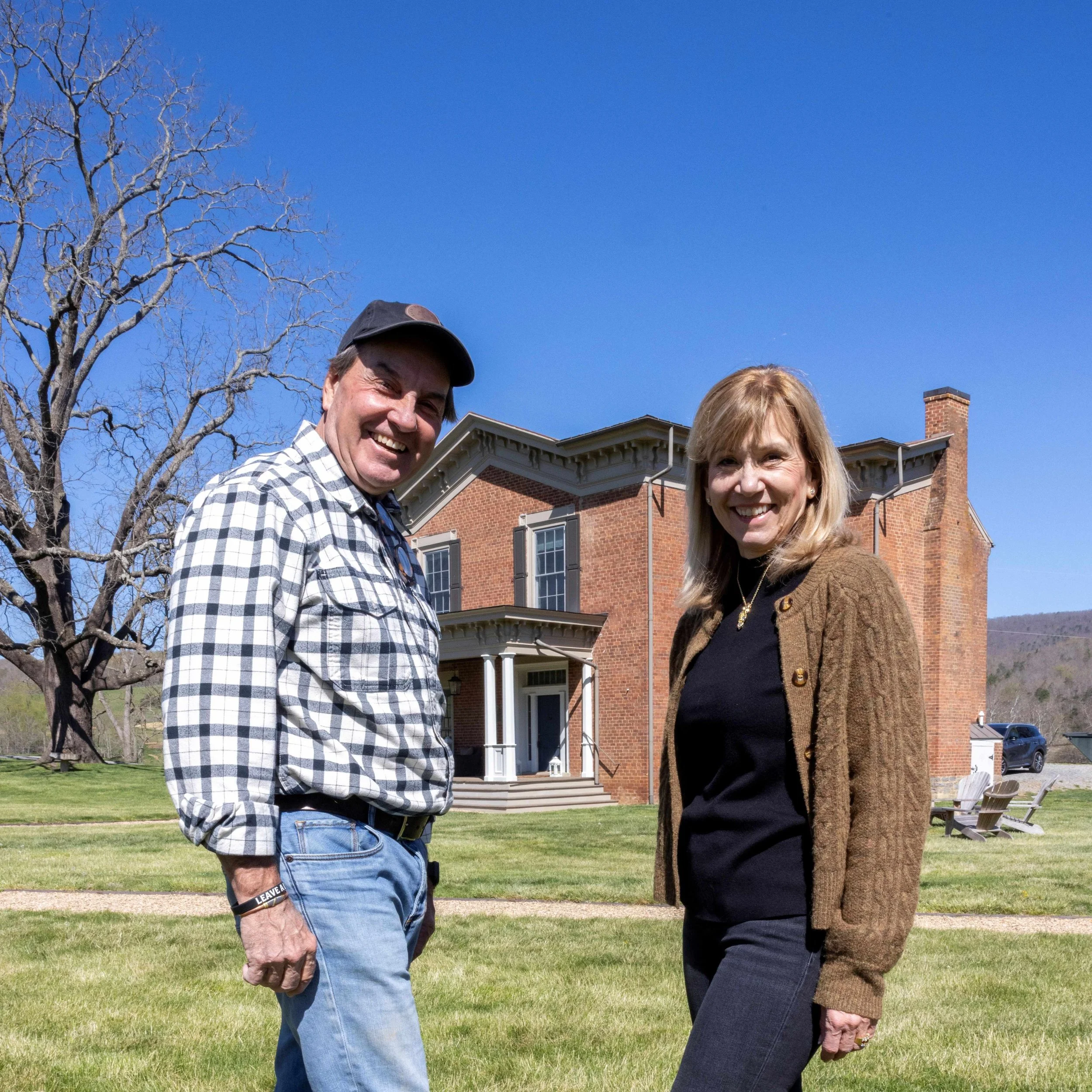
Belle Hampton Legacy Center is guided by Tom and Madeline Hoge, whose combined experience bridges global business leadership and deep family heritage.
Madeline Hoge grew up understanding what it means to carry a family legacy and what happens when the tools to sustain it aren't there. As Executive Director and founder of Belle Hampton Legacy Center, she specializes in family governance, generational succession, and long-term planning. With a background at KPMG, authorship in children’s literacy and dyslexia awareness, and shareholder involvement in fintech innovation, she brings a rare blend of strategy, creativity, and education to the nonprofit mission. She holds an Advanced Certificate in Family Business Advising and has helped shape Caledonia Ventures' multi-generational vision.
Tom Hoge, Managing Director of Caledonia Ventures and CEO of Production Control Units (PCU), brings over three decades of expertise in engineering, logistics, and manufacturing. From his early career with Eaton Corporation to leading operations for a national logistics company and ultimately acquiring and expanding PCU, Tom has consistently demonstrated vision, growth, and stewardship. Alongside his business endeavors, he and Madeline co-founded the Hoge Family Council, dedicated to strengthening family governance through a Family Charter, Code of Conduct, and long-term vision.
Together, Tom and Madeline reside on Belle Hampton Farm—home to more than 250 years of family history, where their commitment to preserving heritage and fostering innovation comes to life through Belle Hampton Legacy Center.
Our Mission
Preserve what families have built. Educate the leaders who carry it forward. Inspire the next generation to do the same.
Our Story
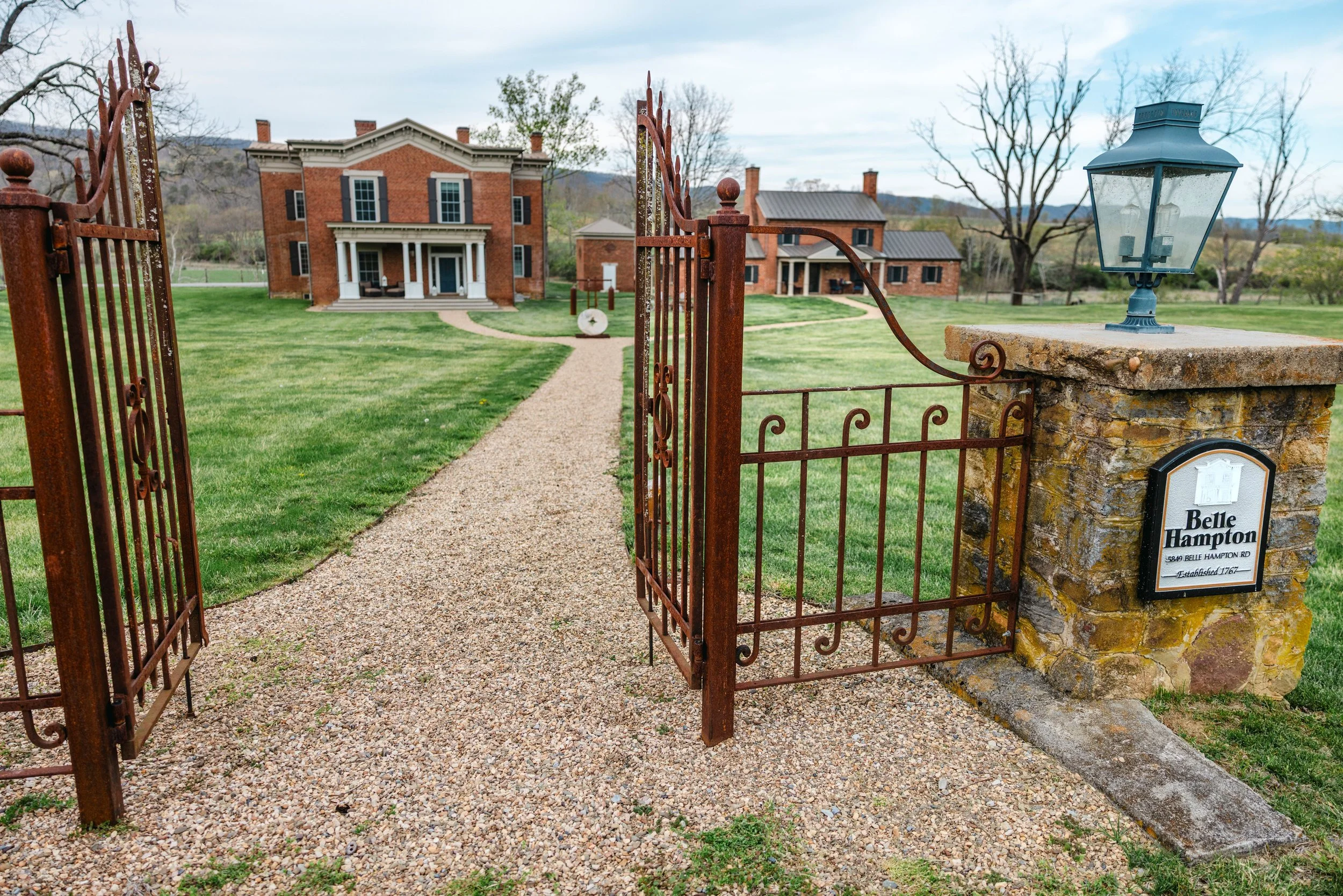
In 1767, James Mayo Hoge settled on a tract of land in Virginia that he called Hayfield, now Belle Hampton Farm. He fought in the Revolutionary War, raised a family of eleven children, and planted roots that would hold for generations.
His son, General James Hoge, transformed the land into a thriving agricultural enterprise spanning 5,000 acres. In 1826, he built the farm's iconic brick manor house, the only brick structure for 100 miles, which became a gathering place for leaders, neighbors, and dignitaries alike. His grandson, Governor James Hoge Tyler, later expanded the home, renamed it Belle Hampton after his daughters, and carried the farm into the late 1800s political era before relocating to Radford in 1891.
For the next century, Belle Hampton passed through generations as a summer residence cherished but slowly neglected. By 2006, the manor sat boarded up, its fields empty, its contents exposed to the weather and the passage of time. What had taken generations to build was on the verge of being lost forever.
Then, serendipitously, Tom Hoge, a great-great-great-grandson of General James Hoge, made an offer to bring it back into the family. In 2019 and 2020, the farm was restored. The General's portrait, preserved through it all, now hangs in the main house foyer where it belongs.
Belle Hampton's rescue story is not just history. It is the reason the Legacy Center exists: proof that what feels like an ending can become a beginning if families have the courage and support to act.
Building Something That Lasts
Belle Hampton Legacy Center is turning vision into action. Our inaugural event, Red, White, and You, launches our regional preservation and family legacy mission this September, bringing families, historians, and community leaders together on historic ground. From there, we're building a membership community, expanding into family-business forums, workshops, and forging university partnerships with Radford and Virginia Tech to connect the next generation with heritage-based learning. This is only the beginning.